
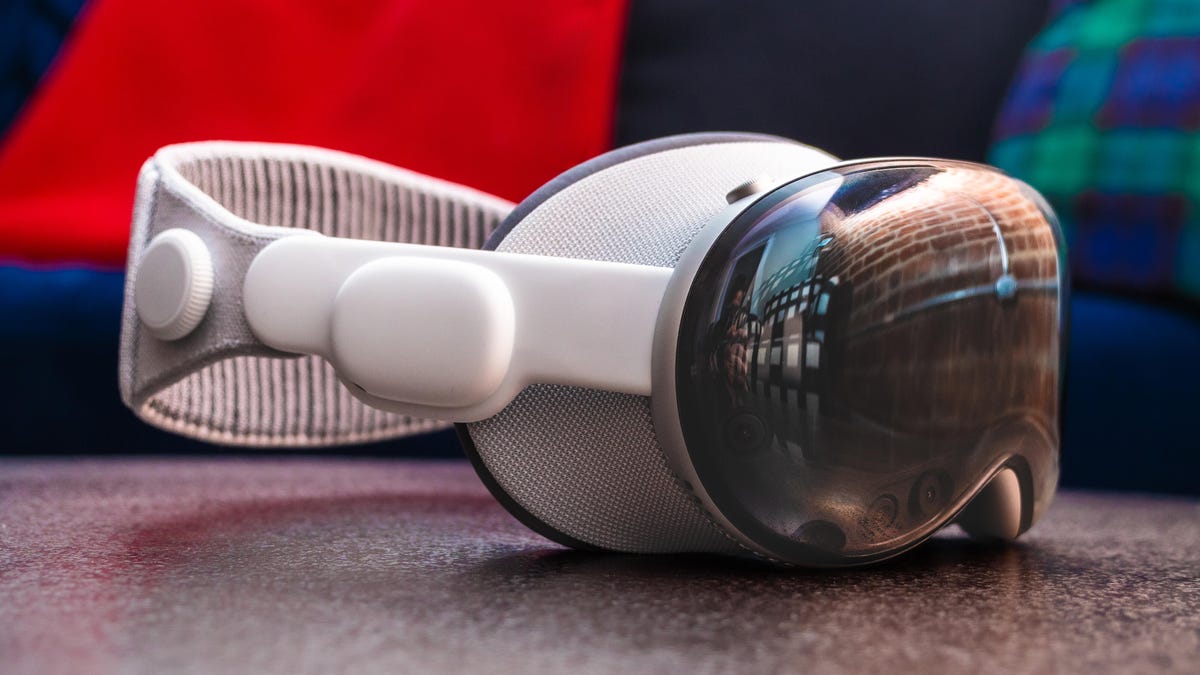
visionOS Revival: Making Apple Vision Pro an Essential Pro Tool
The Apple Vision Pro is far from a hardware dead end—it is an under-leveraged spatial computer. While the hardware is revolutionary, the software must evolve to bridge the gap between a “demo device” and an indispensable professional tool. By focusing on visionOS updates, tighter ecosystem integration, and pro-grade workflows, Apple can transform the headset into a cornerstone of the modern creative suite.
To move the needle from novelty to necessity, Apple must prioritize camera-aware AI, Gaussian splatting, and precision spatial input. Here are five pragmatic recommendations to revolutionize the visionOS experience.
1. Position visionOS as the Hub for Spatial AI
Multimodal, camera-aware AI is the next frontier of personal computing. Apple should position visionOS as its primary spatial assistant platform, leveraging the headset’s unique array of sensors while maintaining its hallmark privacy-first defaults.
- Contextual Spatial Annotations: Live tips and object-aware shortcuts that appear dynamically during complex creative tasks.
- Workspace Recognition: The ability to auto-detect physical environments and instantly recall specific window layouts and digital tools tailored for that room.
- Real-Time Creative Guidance: On-device color grading hints, composition suggestions, and 3D placement guidance for professional editors and designers.
2. Make Gaussian Splatting a First-Class Citizen
Gaussian splatting allows for hyper-realistic volumetric captures that look and behave like real-world objects. For the Vision Pro to become essential for creators, visionOS must treat 3D scanning as a native, streamlined experience.
Streamlined 3D Workflows:
- iPhone Capture Integration: A dedicated app for multi-pass scans that sync via iCloud for high-speed local processing on a Mac or Vision Pro.
- Native Spatial Editing: Tools for model trimming, retopology, and foveated rendering to allow high-performance reviews of high-fidelity 3D assets.
- Universal Exporting: Seamless publishing to USDZ and glTF formats for AR/VR web previews and professional production toolchains.
3. Deep Integration with the Apple Ecosystem
Currently, the Vision Pro can feel like an island. To succeed, it must act as a universal spatial display that extends the utility of the iPhone, iPad, Mac, and Apple Watch.
- Low-Latency App Extension: Mirroring iOS and macOS apps with foveated encoding to maximize battery life and visual performance.
- Handoff for Spatial Work: Capture content on an iPhone, perform quick edits on an iPad, and move to Vision Pro for an immersive final review.
- Apple Watch as a Controller: Leveraging the Watch as a wrist-mounted motion tracker or a quick-access surface for custom spatial shortcuts and macros.
4. Native Pro Apps and High-Performance Streaming
The clearest path to value is the introduction of native professional software. Developers need incentives to adapt video editors, DAWs, and 3D modeling suites for spatial environments. Until native adoption scales, Apple should prioritize:
- Pro-Grade Mac Streaming: Enhancing the Virtual Mac Display to support multiple high-resolution monitors with near-zero latency.
- Developer Sample Projects: Providing robust templates for spatial UI/UX to lower the barrier for entry for independent creative developers.
5. Precision Spatial Input and Peripherals
While hand tracking is intuitive, professional work requires precision. Apple needs to address the input gap to turn the Vision Pro into a true workstation.
- The “Vision Pencil”: A dedicated spatial stylus designed for 3D drawing, precise photo masking, and CAD engineering work.
- Third-Party Hardware Certification: Improved APIs for precision controllers and specialized input devices used in the medical, engineering, and architectural fields.
Conclusion: The Roadmap to Utility
The hardware foundation is already here: M-series performance, world-class eye tracking, and industry-leading passthrough. What the Apple Vision Pro needs is a software evolution that delivers clear, professional utility. By embracing Gaussian splatting, advanced spatial AI, and deeper ecosystem hooks, Apple can ensure the Vision Pro isn’t just a luxury gadget, but the future of professional computing.
Originally published on Microfintool.