
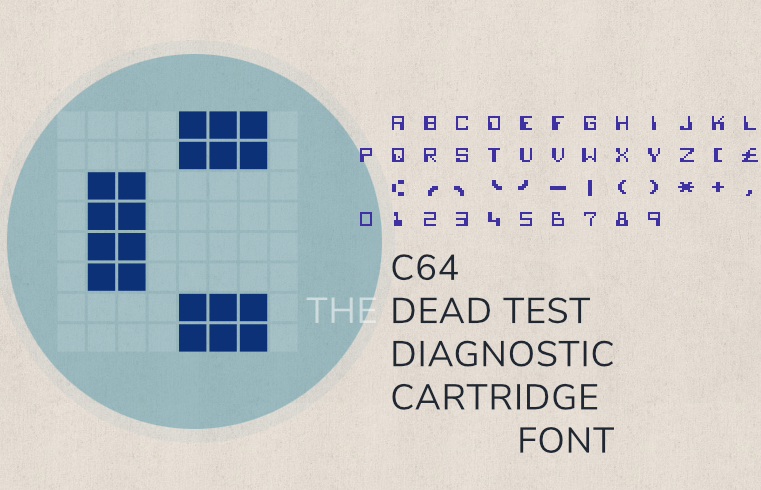
A deep dive into the font of the “Dead Test” diagnostic cartridge of the C64, including an Easter egg, a look into the implementation, and, finally, some Commodore 8-bit character ROMs for download.
Recently, having a cursory look around at the Web, this yielded an alarming result: there’s apparently no documentation of the iconic font of the C64 Dead Test cartridge, no character chart, no read-out, nothing of note. A scandalous omission, we’re attempting to remedy here, for once.
(The same font, BTW, is also implemented in the more advanced Rev. 586200 diagnostic cartridge, Commodore part № 326070-01, the one using a test harness, and the similar Rev. 588220 for the SX64.)
The Cartridge Font
The C64 “Dead Test” diagnostic cartridge Rev. 718220 (Commodore part № 314139-03) famously comes with a special font, embedded in its ROM, thus not using the built-in Character ROM of the C64, in fact requiring none of the built-in ROMs to be working (hence the name), as it comes all in stand-alone package. (We’ll see later how it does this.) Its display font is somewhat special and is, to my knowledge, not used anywhere else and, maybe for this very fact, instantly recognizable to anyone who has ever seen it.
And this is what the display of the “Dead Test” cartridge looks like:
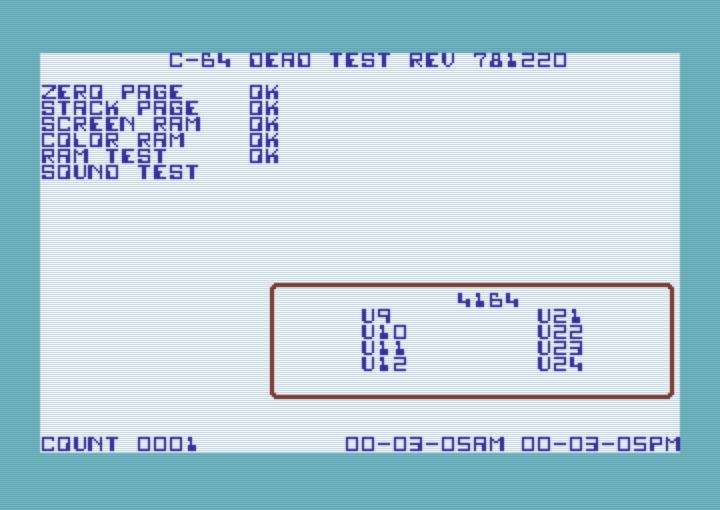
Source: zimmers.net (processed for CRT-like appearance; N.L.)
Jus as a reminder, here’s the normal font used by the C64 (here the upper-case/graphics set):
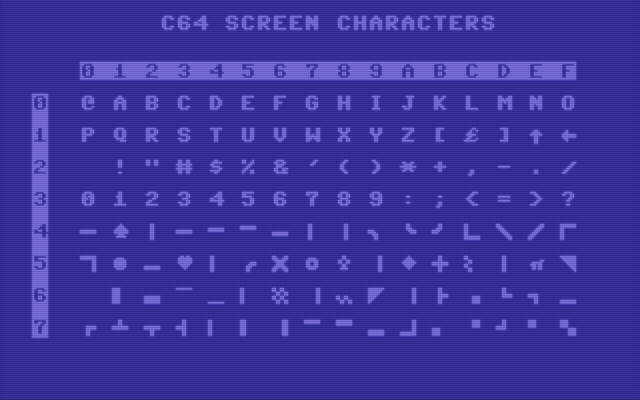
The Dead Test cartridge implements just 58 characters of these (screen codes $00–$39) without any reverse video characters:
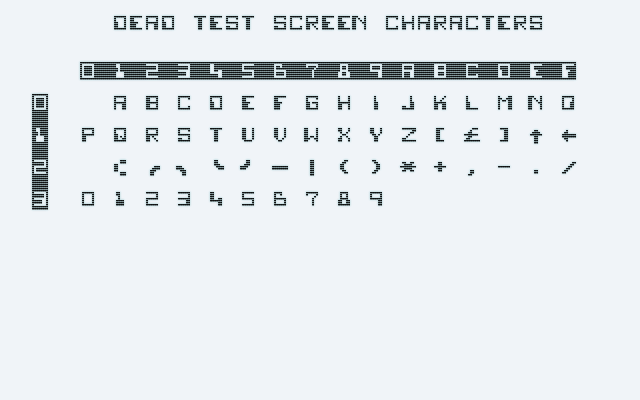
As the attentive reader may observe, this only implements upper-case letters, digits, and a few punctuations and mathematical operators. $1B–$1F ( [ £ ] ↑ ← ) are taken directly from the normal character set, as are $28–$2F ( ( ) * + , − . / ). An extra blank takes the place of the “at” character ( @ ) in the normal character set at $00 (a smart move for a diagnostic cartridge, but this feature is actually never used), and the box border characters ╭ ╮ ╰ ╯ ─ │ are implemented in the range of $22–$27, where we normally find " # $ % & '. And then there’s a mysterious, C-shaped character at $21 (normally the exclamation mark ! ), which isn’t referred to anywhere in the ROM, neither as an operand nor in any data section.
(If you attempted to display any other screen codes, the fill pattern $AA, fine vertical stripes of 10101010 as in “▥”, would be displayed instead, but this doesn’t happen with the cartridge.)
Visually, this is another Computer™ font, made of boxy character shapes stylized by rectangular lumps (and slightly rounded, if the resulation allows for this). There have been others, like the “901447m” character ROM for the PET:
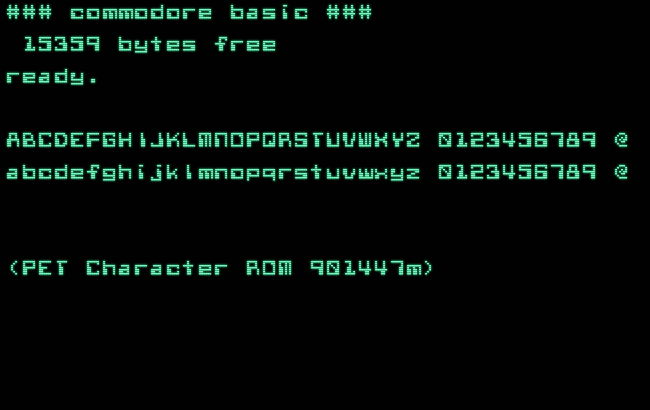
Clearly, these have all been inspired by the MICR (Magnetic Ink Character Recognition) character set E-13B, consisting of just 14 glyphs, the digits 0-9 and 4 additional marks:

The digits of the Dead Test font actually provide a pretty close representation of this, with just the shape of the digit “3” deviating somewhat for of a more boxy look:

The alphabetic characters (A–Z) align with this style, favoring a spread over a 6 × 7 pixels box centered at the top, with the characters “M” and “W” spreading in a wider 7 × 7 box to the right.
Admitteddly, the thin single-pixel vertical strokes won’t do well on a consumer-grade CRT color TV set, but, if you were a service technician or a professional field repair person with access to this cartridge, you probably also had access to a professional monitor (along with the cosy feeling of being somewhat special).
An Unexpected Out-of-Season Easter
It’s this close relation to the MICR E-18B font that brings us closer to the true nature of our mystery character #0x21, a character never to be displayed, since it isn’t referenced anwhere in the cartridge’s code:
So, what is this, a slightly misshaped or heavily stylized character “C”, maybe intended as part of the “chicken lips” logo, missing its second half?
No! — It’s the “transit” symbol of the MICR set, used as a delimiter for bank routing codes!

This is an explicit nod to the MICR set, and a true Easter egg, hidden in a font!
(And its only fair and fitting that this should take the place of the exclamation mark.)
Implementation
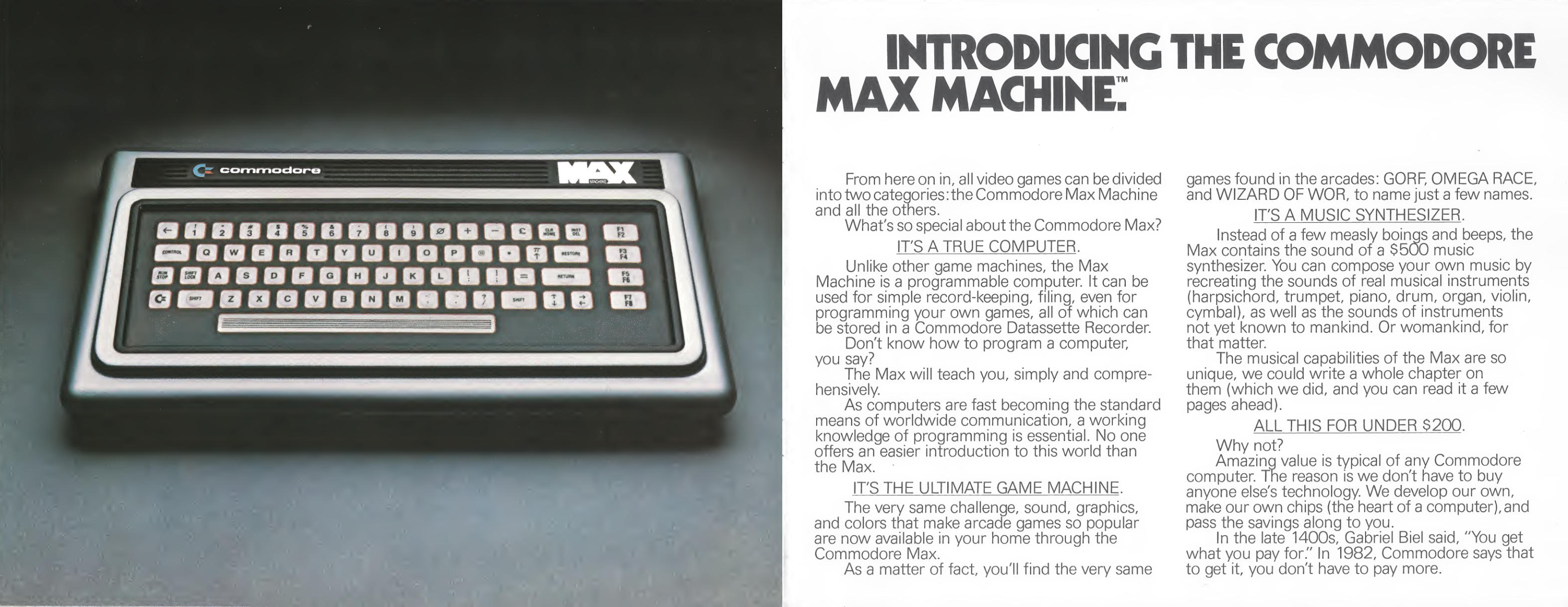
It is a somewhat underappreciated fact that the C64 is actually two machines in one: the architecture that we dearly know as the Commodore 64, and a Commodore Max.
→ Open in a new window/tab. · Source: archive.org.
The Commodore Max, known as the Commodore Max Machine in Japan, also as the Commodore Ultimax in the USA and as the VC-10 in Germany (announced but never released), was a short-lived attempt at a low-budget home computer featuring many of the C64 core ingredients, introduced in 1982 and discontinued the same year.
The Commodore Max packs the SID, the VIC II, the MOS 6510 and a single CIA along with just 4K (or 2K, depending on the source — I think, this is 2K usable memory with $0000–$01FF reserved for the zero-page and the processor stack, and $0400–$07FF reserved for the video memory, with a total amount of 4K addressable RAM in the range of $0000 to $0FFF), no user port and a membrane keyboard. Crucially, the Commodore Max doesn’t include any ROM and relies entirely on cartridge ROM.
The C64 has a neat trick when in it comes to cartridges: there are two pins/signals on the cartridge / expansion port, _GAME and _XROM, to configure the machine depending on the type of cartridge attached to it. If _GAME is low and _XROM is high (normal), the C64 goes into Ultimax mode for use with Commodore Max (Ultimax) cartridges.
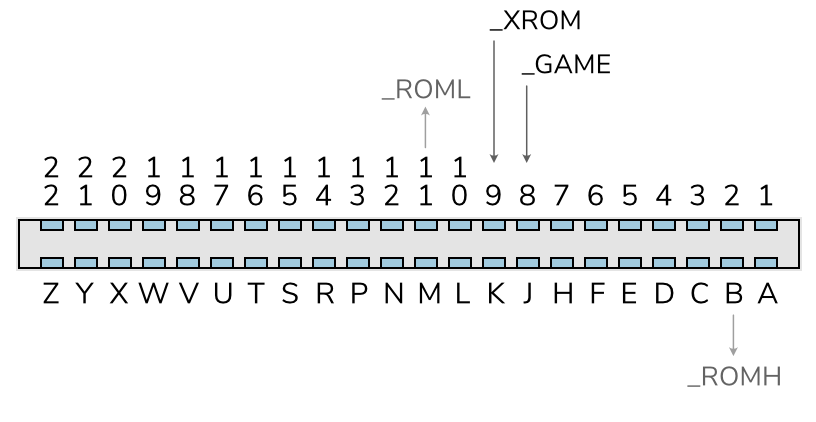
Ultimax mode configures the C64 for the following memory map:
$0000-$0FFF  ....  RAM   (4K)
$1000-$3FFF  ....   -
$4000-$7FFF  ....   -
$8000-$9FFF  ....  ROML  (8K)
$A000-$BFFF  ....   -
$C000-$CFFF  ....   -
$D000-$DFFF  ....  I/O
$E000-$FFFF  ....  ROMH  (8K)
Like on the Commodore Max, there are now just 4K of addressable RAM ($0000–$0FFF) and two addressable 8K ROM banks (ROML at $8000–$9FFF and ROMH at $E000–$FFFF). The I/O area at $D000–$DFFF conveniently remains the same as in standard C64 mode. As we may see, the built-in C64 ROMs, including the character ROM, are banked out. Moreover, ROMH crucially includes the 6510 system vectors including the RESET vector specifying the start address. Thus, the cartridge stands entirely on its own.
(The outgoing signals _ROML and _ROMH select which cartrige ROM area is addressed. For an 8K cartridge, this is ROMH at $E000–$FFFF, which includes the system vectors required for start-up.)
Quite a number of early C64 game cartriges, like Omega Race, are actually Ultimax cartriges and, thanks to this compatibility mode, run just the same on the C64.
The Dead Test cartridge uses the same trick to circumvent the built-in ROMs of the C64: it’s an 8K Ultimax cartridge with ROM code at $E000–$FFFF and a start address (reset vector) of $E000.
The font (i.e., the character matrices) is implemented starting at $EAD8 with the remaining cartridge space filled with $AA:
58 character matrices (screen codes $00-$39)

screen code $00

EAD8: 00    ;  ........
EAD9: 00    ;  ........
EADA: 00    ;  ........
EADB: 00    ;  ........
EADC: 00    ;  ........
EADD: 00    ;  ........
EADE: 00    ;  ........
EADF: 00    ;  ........

screen code $01

EAE0: 7E    ;  .******.
EAE1: 42    ;  .*....*.
EAE2: 42    ;  .*....*.
EAE3: 7E    ;  .******.
EAE4: 46    ;  .*...**.
EAE5: 46    ;  .*...**.
EAE6: 46    ;  .*...**.
EAE7: 00    ;  ........

screen code $02

EAE8: 7E    ;  .******.
EAE9: 62    ;  .**...*.
EAEA: 62    ;  .**...*.
EAEB: 7E    ;  .******.
EAEC: 62    ;  .**...*.
EAED: 62    ;  .**...*.
EAEE: 7E    ;  .******.
EAEF: 00    ;  ........

screen code $03

EAF0: 7E    ;  .******.
EAF1: 42    ;  .*....*.
EAF2: 40    ;  .*......
EAF3: 40    ;  .*......
EAF4: 40    ;  .*......
EAF5: 42    ;  .*....*.
EAF6: 7E    ;  .******.
EAF7: 00    ;  ........

screen code $04

EAF8: 7E    ;  .******.
EAF9: 42    ;  .*....*.
EAFA: 42    ;  .*....*.
EAFB: 62    ;  .**...*.
EAFC: 62    ;  .**...*.
EAFD: 62    ;  .**...*.
EAFE: 7E    ;  .******.
EAFF: 00    ;  ........

screen code $05

EB00: 7E    ;  .******.
EB01: 60    ;  .**.....
EB02: 60    ;  .**.....
EB03: 78    ;  .****...
EB04: 70    ;  .***....
EB05: 70    ;  .***....
EB06: 7E    ;  .******.
EB07: 00    ;  ........

screen code $06

EB08: 7E    ;  .******.
EB09: 60    ;  .**.....
EB0A: 60    ;  .**.....
EB0B: 78    ;  .****...
EB0C: 70    ;  .***....
EB0D: 70    ;  .***....
EB0E: 70    ;  .***....
EB0F: 00    ;  ........

screen code $07

EB10: 7E    ;  .******.
EB11: 42    ;  .*....*.
EB12: 40    ;  .*......
EB13: 6E    ;  .**.***.
EB14: 62    ;  .**...*.
EB15: 62    ;  .**...*.
EB16: 7E    ;  .******.
EB17: 00    ;  ........

screen code $08

EB18: 42    ;  .*....*.
EB19: 42    ;  .*....*.
EB1A: 42    ;  .*....*.
EB1B: 7E    ;  .******.
EB1C: 62    ;  .**...*.
EB1D: 62    ;  .**...*.
EB1E: 62    ;  .**...*.
EB1F: 00    ;  ........

screen code $09

EB20: 10    ;  ...*....
EB21: 10    ;  ...*....
EB22: 10    ;  ...*....
EB23: 18    ;  ...**...
EB24: 18    ;  ...**...
EB25: 18    ;  ...**...
EB26: 18    ;  ...**...
EB27: 00    ;  ........

screen code $0A

EB28: 04    ;  .....*..
EB29: 04    ;  .....*..
EB2A: 04    ;  .....*..
EB2B: 06    ;  .....**.
EB2C: 06    ;  .....**.
EB2D: 66    ;  .**..**.
EB2E: 7E    ;  .******.
EB2F: 00    ;  ........

screen code $0B

EB30: 42    ;  .*....*.
EB31: 44    ;  .*...*..
EB32: 48    ;  .*..*...
EB33: 7E    ;  .******.
EB34: 66    ;  .**..**.
EB35: 66    ;  .**..**.
EB36: 66    ;  .**..**.
EB37: 00    ;  ........

screen code $0C

EB38: 40    ;  .*......
EB39: 40    ;  .*......
EB3A: 40    ;  .*......
EB3B: 60    ;  .**.....
EB3C: 60    ;  .**.....
EB3D: 60    ;  .**.....
EB3E: 7E    ;  .******.
EB3F: 00    ;  ........

screen code $0D

EB40: 43    ;  .*....**
EB41: 67    ;  .**..***
EB42: 5B    ;  .*.**.**
EB43: 43    ;  .*....**
EB44: 43    ;  .*....**
EB45: 43    ;  .*....**
EB46: 43    ;  .*....**
EB47: 00    ;  ........

screen code $0E

EB48: E2    ;  ***...*.
EB49: D2    ;  **.*..*.
EB4A: CA    ;  **..*.*.
EB4B: C6    ;  **...**.
EB4C: C2    ;  **....*.
EB4D: C2    ;  **....*.
EB4E: C2    ;  **....*.
EB4F: 00    ;  ........

screen code $0F

EB50: 7E    ;  .******.
EB51: 42    ;  .*....*.
EB52: 42    ;  .*....*.
EB53: 46    ;  .*...**.
EB54: 46    ;  .*...**.
EB55: 46    ;  .*...**.
EB56: 7E    ;  .******.
EB57: 00    ;  ........

screen code $10

EB58: 7E    ;  .******.
EB59: 42    ;  .*....*.
EB5A: 42    ;  .*....*.
EB5B: 7E    ;  .******.
EB5C: 60    ;  .**.....
EB5D: 60    ;  .**.....
EB5E: 60    ;  .**.....
EB5F: 00    ;  ........

screen code $11

EB60: 7E    ;  .******.
EB61: 42    ;  .*....*.
EB62: 42    ;  .*....*.
EB63: 62    ;  .**...*.
EB64: 6A    ;  .**.*.*.
EB65: 66    ;  .**..**.
EB66: 7E    ;  .******.
EB67: 00    ;  ........

screen code $12

EB68: 7E    ;  .******.
EB69: 42    ;  .*....*.
EB6A: 42    ;  .*....*.
EB6B: 7E    ;  .******.
EB6C: 68    ;  .**.*...
EB6D: 64    ;  .**..*..
EB6E: 62    ;  .**...*.
EB6F: 00    ;  ........

screen code $13

EB70: 7E    ;  .******.
EB71: 42    ;  .*....*.
EB72: 40    ;  .*......
EB73: 7E    ;  .******.
EB74: 02    ;  ......*.
EB75: 62    ;  .**...*.
EB76: 7E    ;  .******.
EB77: 00    ;  ........

screen code $14

EB78: 7E    ;  .******.
EB79: 18    ;  ...**...
EB7A: 18    ;  ...**...
EB7B: 18    ;  ...**...
EB7C: 18    ;  ...**...
EB7D: 18    ;  ...**...
EB7E: 18    ;  ...**...
EB7F: 00    ;  ........

screen code $15

EB80: 62    ;  .**...*.
EB81: 62    ;  .**...*.
EB82: 62    ;  .**...*.
EB83: 62    ;  .**...*.
EB84: 62    ;  .**...*.
EB85: 62    ;  .**...*.
EB86: 3C    ;  ..****..
EB87: 00    ;  ........

screen code $16

EB88: 62    ;  .**...*.
EB89: 62    ;  .**...*.
EB8A: 62    ;  .**...*.
EB8B: 62    ;  .**...*.
EB8C: 62    ;  .**...*.
EB8D: 24    ;  ..*..*..
EB8E: 18    ;  ...**...
EB8F: 00    ;  ........

screen code $17

EB90: C2    ;  **....*.
EB91: C2    ;  **....*.
EB92: C2    ;  **....*.
EB93: C2    ;  **....*.
EB94: DA    ;  **.**.*.
EB95: E6    ;  ***..**.
EB96: C2    ;  **....*.
EB97: 00    ;  ........

screen code $18

EB98: 62    ;  .**...*.
EB99: 62    ;  .**...*.
EB9A: 24    ;  ..*..*..
EB9B: 18    ;  ...**...
EB9C: 24    ;  ..*..*..
EB9D: 62    ;  .**...*.
EB9E: 62    ;  .**...*.
EB9F: 00    ;  ........

screen code $19

EBA0: 62    ;  .**...*.
EBA1: 62    ;  .**...*.
EBA2: 62    ;  .**...*.
EBA3: 34    ;  ..**.*..
EBA4: 18    ;  ...**...
EBA5: 18    ;  ...**...
EBA6: 18    ;  ...**...
EBA7: 00    ;  ........

screen code $1A

EBA8: 7F    ;  .*******
EBA9: 03    ;  ......**
EBAA: 06    ;  .....**.
EBAB: 08    ;  ....*...
EBAC: 10    ;  ...*....
EBAD: 60    ;  .**.....
EBAE: 7F    ;  .*******
EBAF: 00    ;  ........

screen code $1B

EBB0: 3C    ;  ..****..
EBB1: 30    ;  ..**....
EBB2: 30    ;  ..**....
EBB3: 30    ;  ..**....
EBB4: 30    ;  ..**....
EBB5: 30    ;  ..**....
EBB6: 3C    ;  ..****..
EBB7: 00    ;  ........

screen code $1C

EBB8: 0E    ;  ....***.
EBB9: 10    ;  ...*....
EBBA: 30    ;  ..**....
EBBB: FE    ;  *******.
EBBC: 30    ;  ..**....
EBBD: 60    ;  .**.....
EBBE: FF    ;  ********
EBBF: 00    ;  ........

screen code $1D

EBC0: 3C    ;  ..****..
EBC1: 0C    ;  ....**..
EBC2: 0C    ;  ....**..
EBC3: 0C    ;  ....**..
EBC4: 0C    ;  ....**..
EBC5: 0C    ;  ....**..
EBC6: 3C    ;  ..****..
EBC7: 00    ;  ........

screen code $1E

EBC8: 00    ;  ........
EBC9: 18    ;  ...**...
EBCA: 3C    ;  ..****..
EBCB: 7E    ;  .******.
EBCC: 18    ;  ...**...
EBCD: 18    ;  ...**...
EBCE: 18    ;  ...**...
EBCF: 18    ;  ...**...

screen code $1F

EBD0: 00    ;  ........
EBD1: 10    ;  ...*....
EBD2: 30    ;  ..**....
EBD3: 7F    ;  .*******
EBD4: 7F    ;  .*******
EBD5: 30    ;  ..**....
EBD6: 10    ;  ...*....
EBD7: 00    ;  ........

screen code $20

EBD8: 00    ;  ........
EBD9: 00    ;  ........
EBDA: 00    ;  ........
EBDB: 00    ;  ........
EBDC: 00    ;  ........
EBDD: 00    ;  ........
EBDE: 00    ;  ........
EBDF: 00    ;  ........

screen code $21

EBE0: 0E    ;  ....***.
EBE1: 0E    ;  ....***.
EBE2: 60    ;  .**.....
EBE3: 60    ;  .**.....
EBE4: 60    ;  .**.....
EBE5: 60    ;  .**.....
EBE6: 0E    ;  ....***.
EBE7: 0E    ;  ....***.

screen code $22

EBE8: 00    ;  ........
EBE9: 00    ;  ........
EBEA: 00    ;  ........
EBEB: 07    ;  .....***
EBEC: 0F    ;  ....****
EBED: 1C    ;  ...***..
EBEE: 18    ;  ...**...
EBEF: 18    ;  ...**...

screen code $23

EBF0: 00    ;  ........
EBF1: 00    ;  ........
EBF2: 00    ;  ........
EBF3: E0    ;  ***.....
EBF4: F0    ;  ****....
EBF5: 38    ;  ..***...
EBF6: 18    ;  ...**...
EBF7: 18    ;  ...**...

screen code $24

EBF8: 18    ;  ...**...
EBF9: 18    ;  ...**...
EBFA: 1C    ;  ...***..
EBFB: 0F    ;  ....****
EBFC: 07    ;  .....***
EBFD: 00    ;  ........
EBFE: 00    ;  ........
EBFF: 00    ;  ........

screen code $25

EC00: 18    ;  ...**...
EC01: 18    ;  ...**...
EC02: 38    ;  ..***...
EC03: F0    ;  ****....
EC04: E0    ;  ***.....
EC05: 00    ;  ........
EC06: 00    ;  ........
EC07: 00    ;  ........

screen code $26

EC08: 00    ;  ........
EC09: 00    ;  ........
EC0A: 00    ;  ........
EC0B: FF    ;  ********
EC0C: FF    ;  ********
EC0D: 00    ;  ........
EC0E: 00    ;  ........
EC0F: 00    ;  ........

screen code $27

EC10: 18    ;  ...**...
EC11: 18    ;  ...**...
EC12: 18    ;  ...**...
EC13: 18    ;  ...**...
EC14: 18    ;  ...**...
EC15: 18    ;  ...**...
EC16: 18    ;  ...**...
EC17: 18    ;  ...**...

screen code $28

EC18: 0C    ;  ....**..
EC19: 18    ;  ...**...
EC1A: 30    ;  ..**....
EC1B: 30    ;  ..**....
EC1C: 30    ;  ..**....
EC1D: 18    ;  ...**...
EC1E: 0C    ;  ....**..
EC1F: 00    ;  ........

screen code $29

EC20: 30    ;  ..**....
EC21: 18    ;  ...**...
EC22: 0C    ;  ....**..
EC23: 0C    ;  ....**..
EC24: 0C    ;  ....**..
EC25: 18    ;  ...**...
EC26: 30    ;  ..**....
EC27: 00    ;  ........

screen code $2A

EC28: 00    ;  ........
EC29: 66    ;  .**..**.
EC2A: 3C    ;  ..****..
EC2B: FF    ;  ********
EC2C: 3C    ;  ..****..
EC2D: 66    ;  .**..**.
EC2E: 00    ;  ........
EC2F: 00    ;  ........

screen code $2B

EC30: 00    ;  ........
EC31: 18    ;  ...**...
EC32: 18    ;  ...**...
EC33: 7E    ;  .******.
EC34: 18    ;  ...**...
EC35: 18    ;  ...**...
EC36: 00    ;  ........
EC37: 00    ;  ........

screen code $2C

EC38: 00    ;  ........
EC39: 00    ;  ........
EC3A: 00    ;  ........
EC3B: 00    ;  ........
EC3C: 00    ;  ........
EC3D: 18    ;  ...**...
EC3E: 18    ;  ...**...
EC3F: 30    ;  ..**....

screen code $2D

EC40: 00    ;  ........
EC41: 00    ;  ........
EC42: 00    ;  ........
EC43: 7E    ;  .******.
EC44: 00    ;  ........
EC45: 00    ;  ........
EC46: 00    ;  ........
EC47: 00    ;  ........

screen code $2E

EC48: 00    ;  ........
EC49: 00    ;  ........
EC4A: 00    ;  ........
EC4B: 00    ;  ........
EC4C: 00    ;  ........
EC4D: 18    ;  ...**...
EC4E: 18    ;  ...**...
EC4F: 00    ;  ........

screen code $2F

EC50: 00    ;  ........
EC51: 03    ;  ......**
EC52: 06    ;  .....**.
EC53: 0C    ;  ....**..
EC54: 18    ;  ...**...
EC55: 30    ;  ..**....
EC56: 60    ;  .**.....
EC57: 00    ;  ........

screen code $30

EC58: 7E    ;  .******.
EC59: 42    ;  .*....*.
EC5A: 42    ;  .*....*.
EC5B: 42    ;  .*....*.
EC5C: 42    ;  .*....*.
EC5D: 42    ;  .*....*.
EC5E: 7E    ;  .******.
EC5F: 00    ;  ........

screen code $31

EC60: 30    ;  ..**....
EC61: 30    ;  ..**....
EC62: 10    ;  ...*....
EC63: 10    ;  ...*....
EC64: 3C    ;  ..****..
EC65: 3C    ;  ..****..
EC66: 3C    ;  ..****..
EC67: 00    ;  ........

screen code $32

EC68: 7E    ;  .******.
EC69: 02    ;  ......*.
EC6A: 02    ;  ......*.
EC6B: 7E    ;  .******.
EC6C: 40    ;  .*......
EC6D: 40    ;  .*......
EC6E: 7E    ;  .******.
EC6F: 00    ;  ........

screen code $33

EC70: 7E    ;  .******.
EC71: 02    ;  ......*.
EC72: 02    ;  ......*.
EC73: 7E    ;  .******.
EC74: 06    ;  .....**.
EC75: 06    ;  .....**.
EC76: 7E    ;  .******.
EC77: 00    ;  ........

screen code $34

EC78: 60    ;  .**.....
EC79: 60    ;  .**.....
EC7A: 60    ;  .**.....
EC7B: 66    ;  .**..**.
EC7C: 7E    ;  .******.
EC7D: 06    ;  .....**.
EC7E: 06    ;  .....**.
EC7F: 00    ;  ........

screen code $35

EC80: 7E    ;  .******.
EC81: 40    ;  .*......
EC82: 40    ;  .*......
EC83: 7E    ;  .******.
EC84: 02    ;  ......*.
EC85: 02    ;  ......*.
EC86: 7E    ;  .******.
EC87: 00    ;  ........

screen code $36

EC88: 78    ;  .****...
EC89: 48    ;  .*..*...
EC8A: 40    ;  .*......
EC8B: 7E    ;  .******.
EC8C: 42    ;  .*....*.
EC8D: 42    ;  .*....*.
EC8E: 7E    ;  .******.
EC8F: 00    ;  ........

screen code $37

EC90: 7E    ;  .******.
EC91: 42    ;  .*....*.
EC92: 04    ;  .....*..
EC93: 08    ;  ....*...
EC94: 08    ;  ....*...
EC95: 08    ;  ....*...
EC96: 08    ;  ....*...
EC97: 00    ;  ........

screen code $38

EC98: 3C    ;  ..****..
EC99: 24    ;  ..*..*..
EC9A: 24    ;  ..*..*..
EC9B: 3C    ;  ..****..
EC9C: 66    ;  .**..**.
EC9D: 66    ;  .**..**.
EC9E: 7E    ;  .******.
EC9F: 00    ;  ........

screen code $39

ECA0: 7E    ;  .******.
ECA1: 42    ;  .*....*.
ECA2: 42    ;  .*....*.
ECA3: 7E    ;  .******.
ECA4: 06    ;  .....**.
ECA5: 06    ;  .....**.
ECA6: 06    ;  .....**.
ECA7: 00    ;  ........
Notably, the order (with the exception of the border characters) follows the usual PETSCII screen code order. However, since we’re no longer relying on any C64 ROM, the order and what screen codes actually represent what is merely convention at this point. We simply put a code in the video RAM at $0400–$07FF and whatever character matrices are found at the corresponding address in the cartridge ROM are displayed by the hardware, which is in this case configured by the cartridge code to look up the respective character matrices at $EAD8. In Ultimax mode, there is no further meaning to screen codes implied.
E.g., Omega Race implements its character matrices at $F800 in the order: BLANK 0-9 A-Z ( ) - ; ., followed by various graphics characters.
At this point, it should be also clear that this is all there is. There are no further character matrices implemented and no reverse images of the above glyphs. If we were to address any screen code beyond $39, we’d address the $AA fill area. But there’s no code in the cartridge ROM attempting this.
A Dead Test Font for All
If you followed this until here, dear reader, you’re clearly a fan of the Dead Test font. Wouldn’t it be nice to use it whenever you want? Now you can! You deserve it.
I give you (© Sir Clive Sinclair) a Dead Test Font for all!
A Dead Test font for you (C64), and a Dead Test font for you (VIC-20), and a Dead Test font for you (PET)…
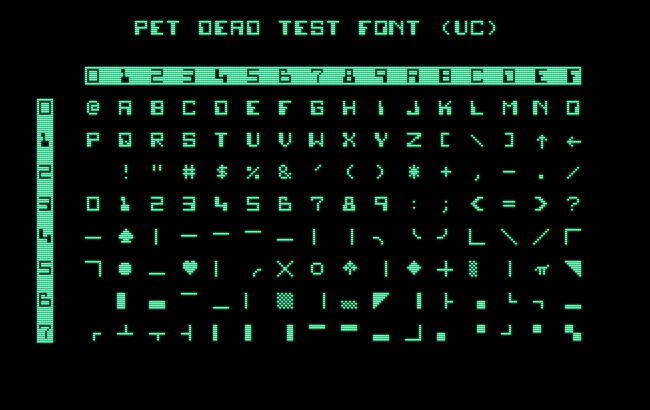
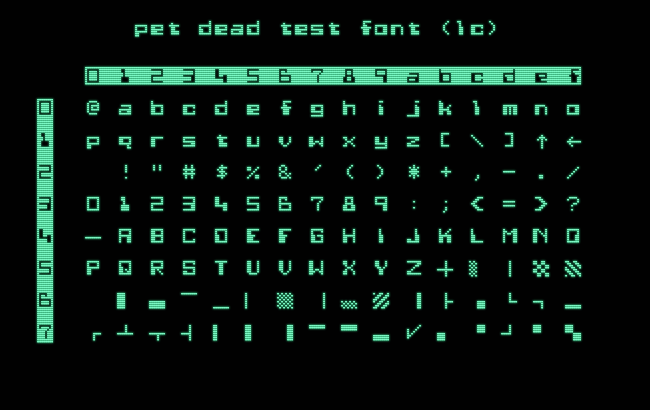
For the purpose of general use, I’ve devised a “sympathetic” lower-case set to go along with the upper-case glyphs as found on the cartridge, and also an “@” symbol, as well. Other clyphs are just the same as in the respective standard character ROM. (Sadly, there isn’t really a space for the #0x21 Easter egg, AKA transit symbol, if we want to stick to the general use idea.)
And this is what it looks like:
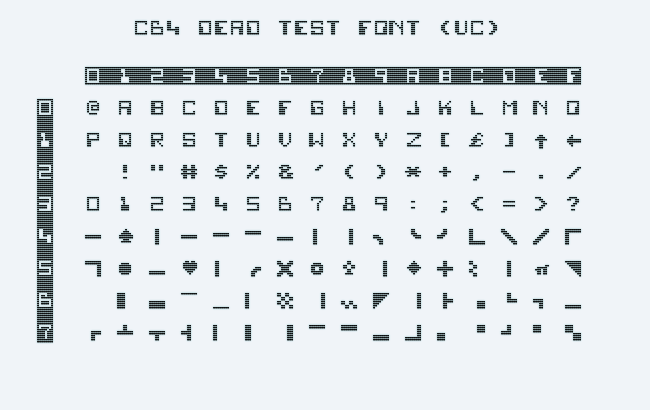
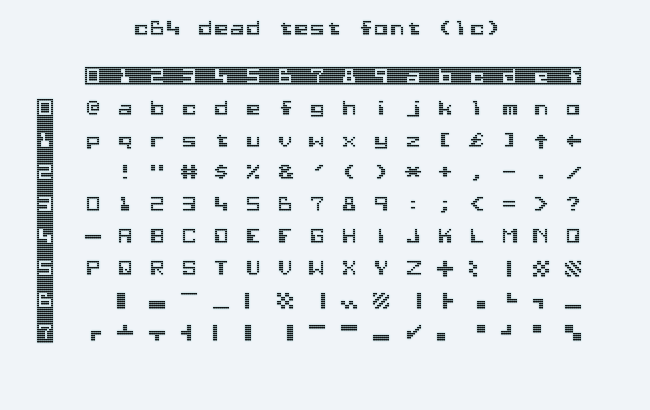
And for the PET (similar for the VIC-20, but with “£” instead of the backslash and including reverse character forms), available in the old PET 2001 format and for newer PETs:
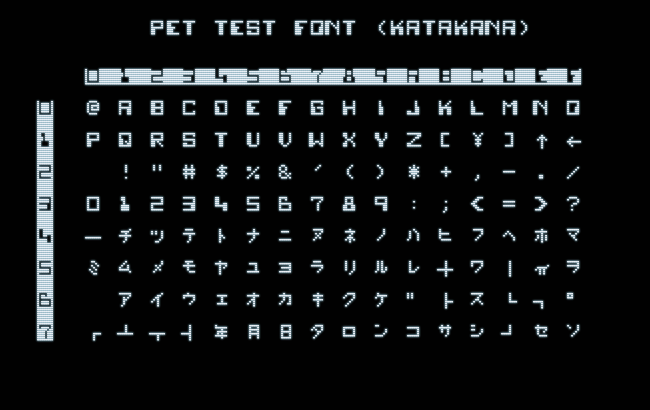
And, because I have a soft spot for those Japanese character ROMs, also in the various katakana variants (here for the PET, but also for the VIC-1001 and the C64):
Download them here:
— And that’s all folks. —

Norbert Landsteiner,
Vienna, 2026-05-24
[ad_2]
Source link
More on the c64 dead test font
Stay tuned for updates on the c64 dead test font as the story develops. Related: LW — I Gave an AI a Civilization to Run. It Built a Nuke..
Frequently Asked Questions
The font is embedded in the cartridge's ROM, so it works without using the C64's built-in character ROM and doesn't require any built-in ROMs to be working, which is where the name comes from.
It implements just 58 characters (screen codes $00 through $39), covering upper-case letters, digits, and a few punctuation and mathematical operators, with no reverse video characters.
There is a mysterious C-shaped character at $21, where the exclamation mark would normally be, which isn't referred to anywhere in the ROM, neither as an operand nor in any data section.
The same font is also implemented in the more advanced Rev. 586200 diagnostic cartridge (Commodore part 326070-01) and the similar Rev. 588220 for the SX64.