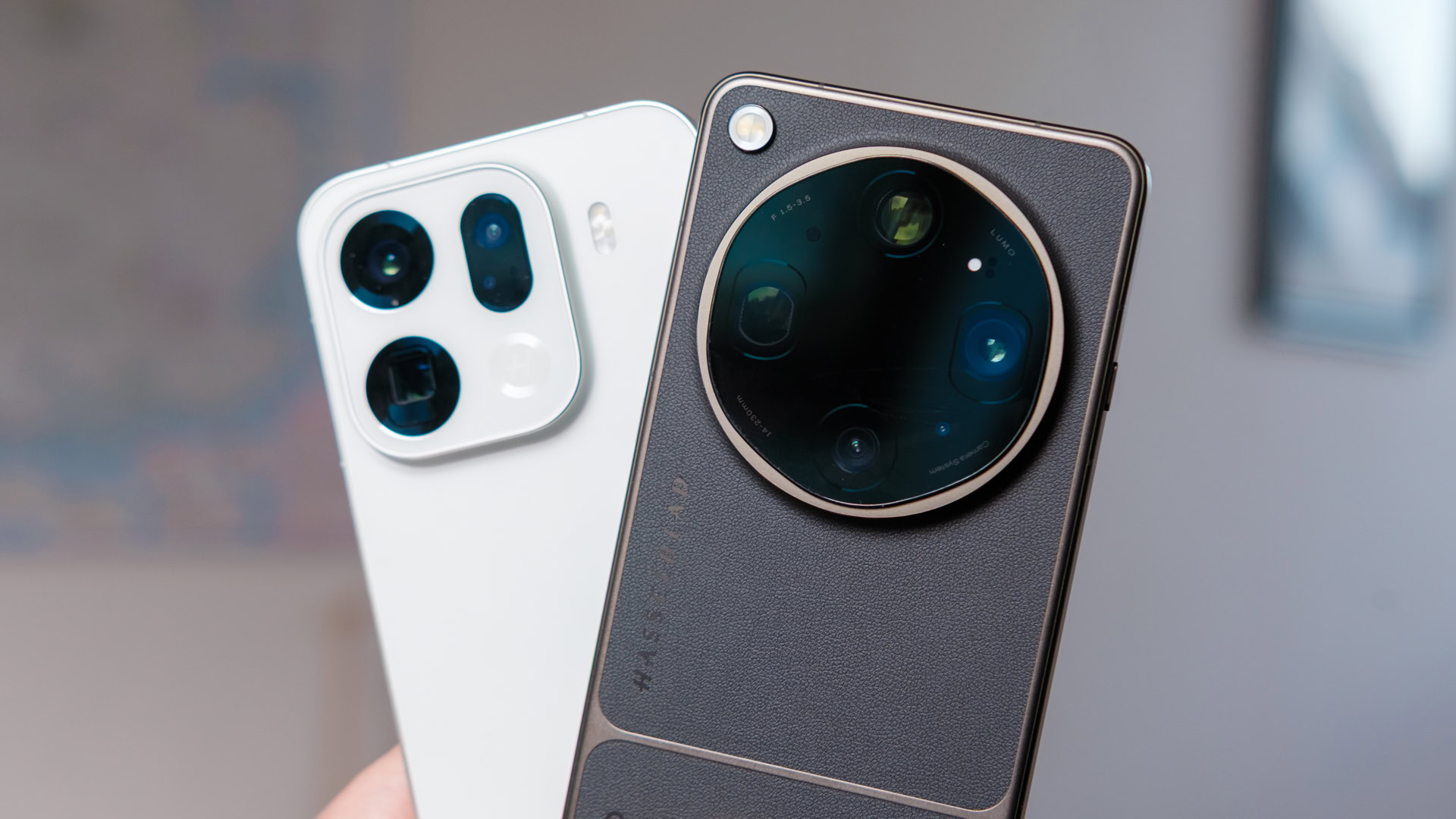
Outside of Samsung, it’s not often that two similar flagship phones launch with entirely different silicon inside, but with the Find X9 Pro and X9 Ultra, we have a rare opportunity for an interesting benchmark comparison. With the Ultra powered by Qualcomm’s latest Snapdragon 8 Elite Gen 5 and the other by MediaTek’s Dimensity 9500, this is about as close as we get to a like-for-like chipset showdown.
Because both devices share similar specs, cooling approaches, and software optimizations, this comparison strips away many of the usual variables and puts the spotlight squarely on the silicon. That gives us a rare chance to see how Qualcomm and MediaTek’s top-tier 2026 processors really stack up when everything else is held (mostly) equal.
Two phones, same brand, different chips; a unique benchmarking opportunity.
It’s worth noting that the Pro has a screen resolution of 1,272×2,772, compared to 1,440×3,168 for the Ultra. However, 3DMark’s graphics tests we’ll be using render at a fixed resolution (typically 2560×1440) and simply scale to fit, so the different displays won’t affect performance. I also have the 16GB RAM in the X9 Pro, but just 12GB in the Ultra. Again, the benchmarks we’re running aren’t going to come close to maxing this out, so it won’t influence the results here.
The most important factor here is that we have two phones that should use very similar, if not identical, performance and battery optimizations, yet they run two different chips. So let’s dive in to see what our usual benchmarks have to say.
Snapdragon vs Dimensit:y 2026 edition
Starting with CPU tests via Geekbench 6, we can see that Qualcomm’s custom Oryon CPU cores continue to lead the Arm C1-Ultra and C1-Pro. This gives the Find X9 Ultra a 13.5% single-core gain over its older sibling, a marginal win for rare situations that require a little extra grunt, such as game emulation. Multi-core is similar, with a 13.1% win for the Snapdragon, which might translate into just about tangible gains when the phone is working hard on multiple or multi-threaded tasks.
This benefit translates over to PC Mark’s Work 3.0 tasks, which test performance across simulated video editing, document compression, and other common tasks. Once again, the Snapdragon comes out 14.8% ahead here, also proving that more RAM does not translate into more performance in these work-related benchmarks.
The results are somewhat turned on their head when we move to graphics. Arm’s G1-Ultra GPU has made solid gains this year and actually now outperforms Qualcomm’s Adreno 840 in the single-run 3DMark tests I ran. MediaTek’s chip scores a 5.9% win in the demanding Wild Life Extreme test and hands in a more substantial 13.3% win in the ray-tracing-based Solar Bay test. That latter result points to a decent lead for Arm, though ray tracing remains a niche in mobile games. In most Android games, performance is likely to be very, very close between these two chips.
Unfortunately, the Find X9 Pro doesn’t sustain this performance lead for very long. It only takes a couple of runs/minutes for the Ultra to take the lead, and it holds a reasonable advantage for about half of the stress tests. In the second half, both phones are throttling quite hard, with results jumping up and down as performance is cut back to allow them to cool off. The behavour is pretty similar on both models, though the Ultra a little more erratic.
You will note, however, that the Find X9 Pro runs substantially cooler, keeping its temperatures below 40°C (104°F), while the Ultra almost hits 49°C (120°F) before throttling really hits hard. This results in a much hotter handset with the Ultra. Given that the two end up with very similar performance levels by the end of the stress tests, I’d argue the MediaTek chip is doing a better job on balance, and would certainly be more comfortable to hold during those long gaming sessions.
If you’re wondering, the OPPO Find X9 Ultra’s Snapdragon 8 Elite Gen 5 implementation sits right in the middle of the pack among other 2026 flagships that use the same chip.
While it’s a few percentage points behind the overclocked Snapdragon 8 Elite Gen 5 for Galaxy in the Samsung Galaxy S26 Ultra, it marginally outperforms the Xiaomi 17 Ultra and the OnePlus 15. Based on these results, MediaTek’s flagship chip is closer to Qualcomm’s higher-clocked model in graphics and even beats it in ray tracing performance. That’s undoubtedly good news for gamers looking for more choice in hardware.
Is Snapdragon still the fastest chip? It’s complicated

Robert Triggs / Android Authority
Ultimately, this head-to-head highlights just how competitive the flagship chipset space has become in 2026. Qualcomm still holds a measurable edge in CPU performance, but MediaTek has closed the gap significantly while pushing ahead in areas like GPU efficiency and thermals.
For most users, these differences will be hard to notice in day-to-day use, and that’s perhaps the biggest takeaway: both chips deliver more performance than modern smartphones realistically need. Instead of a clear winner, what we’re seeing is a shift toward parity — and that’s great news for consumers. Whether you opt for the Snapdragon-powered Ultra or the Dimensity-equipped Pro, you’re getting a top-tier experience with very few compromises either way.
Arm’s G1-Ultra GPU has closed the gap on Adreno and then some.
Still, at the performance extremes, Qualcomm’s custom Oryon CPU cores continue to hold an advantage over Arm’s latest in-house cores. This remains a differentiator in bridging the gap between mobile and laptop performance. However, with very few CPU-bound smartphone tasks, it’s not entirely clear how large this lead is, especially as AI tasks are increasingly offloaded to NPU, GPU, and even AI-accelerator components like Arm’s SME2 in the Dimensity 9500.
Personally, I think the graphics front is a more interesting battleground in today’s market. Not because mobile games demand higher frame rates; both chipsets are overkill for the most popular Android titles, even with 120fps and graphics cranked up. But rather, it’s about delivering high frame rates and graphical fidelity with reasonable power consumption and comfortable temperatures for handheld use. While these two chips seem reasonably evenly matched in performance, MediaTek’s use of the Arm G1 Ultra appears to give it an advantage in ray tracing and overall temperatures.
While the results are too close to call for an outright winner based on these benchmarks, I will say that the Snapdragon 8 Elite Gen 5 is not the only premium option in town. You’re certainly not missing out on much if you picked the Find X9 Pro over the Ultra, at least not in the chipset department.
Don’t want to miss the best from Android Authority?


Thank you for being part of our community. Read our Comment Policy before posting.